Learning objective: to understand the purpose of film certification and to apply your understanding to your own thriller film.
Lesson outcomes: Students will understand what a film certificate is and explain its purpose with detail and their own knowledge.
Film censorship is the age rating for films (target audience)
Film certificates

Universal, suitable for audiences aged 4 years and over. Check with consumer advice before allowing under 4's to view this film.
Discrimination
No discriminatory language or behaviour unless
No discriminatory language or behaviour unless
clearly disapproved of.
Drugs
Horror Scary sequences should be mild, brief and unlikely to
cause undue anxiety to young children. The outcome
should be reassuring.
Imitable behaviour
No potentially dangerous behaviour which young
children are likely to copy. No emphasis on realistic
or easily accessible weapons.
Language
Infrequent use only of very mild bad language.
Nudity
Occasional natural nudity, with no sexual context.
Sex
Mild sexual behaviour (for example, kissing) and
references only (for example, to ‘making love’).
Theme
While problematic themes may be present, their
treatment must be sensitive and appropriate for
young children.
Violence
Mild violence only. Occasional mild threat or
menace only. Discrimination
No references to illegal drugs or drug misuse unless
they are infrequent and innocuous, or there is a clear
educational purpose or anti-drug message suitable
for young children.some examples of U's are :
Toy Story 3 2010

Shrek Forever After 2010

Up 2009

WALL-E 2008

 Parental Guidance - General Viewing, but some scenes may be unsuitable for young children.
Discrimination
Discriminatory language or behaviour is unlikely to
be acceptable unless clearly disapproved of or in an
educational or historical context. Discrimination by
a character with which children can readily identify
is unlikely to be acceptable.
Drugs
References to illegal drugs or drug misuse must be
innocuous or carry a suitable anti-drug message.
Horror
Frightening sequences should not be prolonged or
intense. Fantasy settings may be a mitigating factor.
Imitable behaviour
No detail of potentially dangerous behaviour which
young children are likely to copy. No glamorisation
of realistic or easily accessible weapons.
Language
Mild bad language only.
Nudity
Natural nudity, with no sexual context.
Sex
Sexual activity may be implied, but should be
discreet and infrequent. Mild sex references and
innuendo only.
Theme
Where more serious issues are featured (for example,
domestic violence) nothing in their treatment should
condone unacceptable behaviour.
Violence
Moderate violence, without detail, may be allowed,
if justified by its context (for example, history,
comedy or fantasy).
Some examples of a PG:
Kung Fu Panda 2008

Harry Potter and the Prisoner of Azkaban

Back To The Future

The Lord Of The Rings - The Fellowship Of The Ring

 12A with Parental Guidance - 12A means that the BBFC have classified the film unsuitable for children under 12. However, they may still watch the film, as long as they are accompanied by someone over 18 at all times during the showing. Advice is given regarding the content of the film and the ADULT must decide if it is appropriate for the accompanying under 12.
Discrimination
Discriminatory language or behaviour must not be
endorsed by the work as a whole. Aggressive
discriminatory language or behaviour is unlikely
to be acceptable unless clearly condemned.
Drugs
Any misuse of drugs must be infrequent and should
not be glamorised or give instructional detail.
Horror
Moderate physical and psychological threat may be
permitted, provided disturbing sequences are not
frequent or sustained.
Imitable behaviour
Dangerous behaviour (for example, hanging, suicide and
self-harming) should not dwell on detail which could be
copied, or appear pain or harm free. Easily accessible
weapons should not be glamorised.
Language
Moderate language is allowed. The use of strong
language (for example, ‘fuck’) must be infrequent.
Nudity
Nudity is allowed, but in a sexual context must be brief
and discreet.
Sex
Sexual activity may be briefly and discreetly portrayed.
Sex references should not go beyond what is suitable for
young teenagers. Frequent crude references are unlikely
to be acceptable.
Theme
Mature themes are acceptable, but their treatment must
be suitable for young teenagers.
Violence
Moderate violence is allowed but should not dwell on
detail. There should be no emphasis on injuries or blood,
but occasional gory moments may be permitted if
justified by the context.
Sexual violence may only be implied or briefly and
discreetly indicated, and must have a strong contextual
justification.
Some examples of a 12 :
The Lord Of The Rings - The Return Of The King 2003

The Bourne Ultimatum 2007

The Dark Knight 2008

Star Trek 2008

 15 - Suitable only for persons of 15 years and older. Please note: proof of age may be required.
The work as a whole must not endorse discriminatory
language or behaviour.
Drugs
Drug taking may be shown but the film as a whole must not
promote or encourage drug misuse. The misuse of easily
accessible and highly dangerous substances (for example,
aerosols or solvents) is unlikely to be acceptable.
Horror
Strong threat and menace are permitted unless sadistic
or sexualised.
Imitable behaviour
Dangerous behaviour (for example, hanging, suicide and
self-harming) should not dwell on detail which could be
copied. Easily accessible weapons should not be glamorised.
Language
There may be frequent use of strong language (for example,
‘fuck’). The strongest terms (for example, ‘cunt’) may be
acceptable if justified by the context. Aggressive or repeated
use of the strongest language is unlikely to be acceptable.
Nudity
Nudity may be allowed in a sexual context but without
strong detail. There are no constraints on nudity in a
non-sexual or educational context.
Sex
Sexual activity may be portrayed without strong detail.
There may be strong verbal references to sexual behaviour,
but the strongest references are unlikely to be acceptable
unless justified by context. Works whose primary purpose is
sexual arousal or stimulation are unlikely to be acceptable.
Theme
No theme is prohibited, provided the treatment is
appropriate for 15 year olds.
Violence
Violence may be strong but should not dwell on the infliction
of pain or injury. The strongest gory images are unlikely to
be acceptable. Strong sadistic or sexualised violence is also
unlikely to be acceptable.
There may be detailed verbal references to sexual violence
but any portrayal of sexual violence must be discreet and
have a strong contextual justification.
Some examples of a 15 :
The Matrix 1999


Gladiator 2000

Slumdog Millionaire 2009

The Hangover 2009


18 - Suitable only for persons of 18 years and older. Please note: proof of age may be required
In line with the consistent findings of the BBFC’s public
consultations and The Human Rights Act 1998, at ‘18’ the
BBFC’s guideline concerns will not normally override
the principle that adults should be free to choose their
own entertainment. Exceptions are most likely in the
following areas:
• where the material is in breach of the criminal law,
or has been created through the commission of a
criminal offence
• where material or treatment appears to the BBFC to
risk harm to individuals or, through their behaviour,
to society – for example, any detailed portrayal of
violent or dangerous acts, or of illegal drug use,
which may cause harm to public health or morals.
This may include portrayals of sexual or sexualised
violence which might, for example, eroticise or
endorse sexual assault
• where there are more explicit images of sexual
activity which cannot be justified by context. Such
images may be appropriate in ‘R18’ works, and in
‘sex works’ (see below) would normally be confined
to that category.
In the case of video works (including video games),
which may be more accessible to younger viewers,
intervention may be more frequent than for cinema films.
Sex education at ‘18’
Where sex material genuinely seeks to inform and
educate in matters such as human sexuality, safer
sex and health, explicit images of sexual activity may
be permitted.
Sex works at ‘18’
Sex works are works whose primary purpose is sexual
arousal or stimulation. Sex works containing only material
which may be simulated are generally passed ‘18’. Sex
works containing clear images of real sex, strong fetish
material, sexually explicit animated images, or other
very strong sexual images will be confined to the ‘R18’
category. Material which is unacceptable in a sex work
at ‘R18’ is also unacceptable in a sex work at ‘18’.
Some examples of a 18:
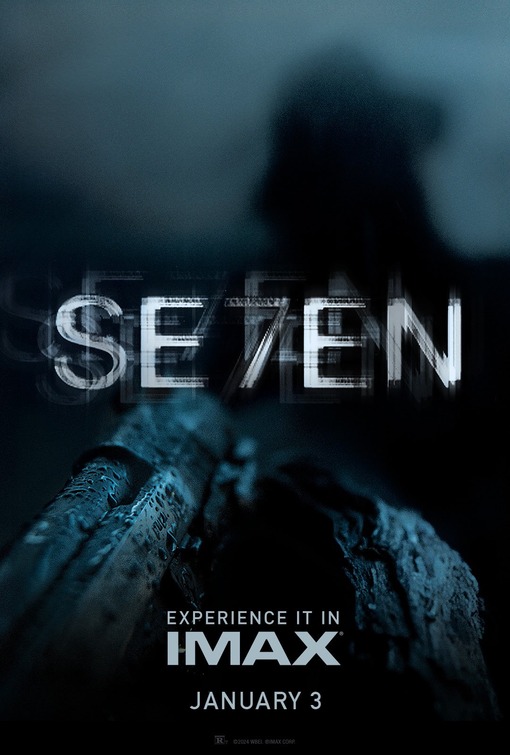
Seven 1995
Fight Club 1999

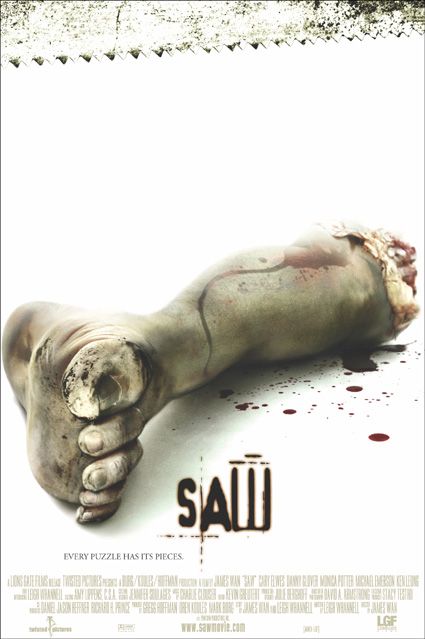
Saw 2004
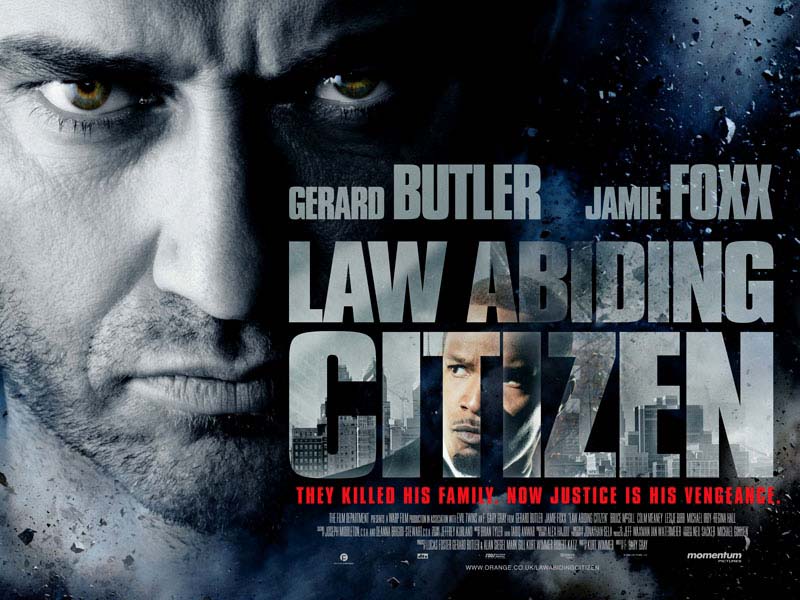
Law Abiding Citizen 2010

These divisions have employed from nearly 85 years of censorship.
Censoring films started to be used during the 90's. There have been laws set by the BBFC (British Board of Film Classification) about what is allowed to be shown on a television. There are guidelines that film makers have to follow whilst making a film. As i am making a thriller film i need to be aware of these guidelines.
My own production can fall into a 12A or a 15 for the reason of that there is not a lot of blood or bad language and also because it doesn't show anything, for example it uses the kulshov effect to show the baby is missing.