Wednesday, 17 November 2010

Narrative theory

Lesson objective: To be able to show an understanding of what Narrative theory is.

Lesson outcomes
All: will be able to describe the different points of the theory (E)
Most: will be able to explain the different theories with appropriate examples (C)
Some: will be able to use media language effectively to discuss the purpose of narrative theory with a variety of examples (A)

Narrative convection's

·         Genre
·         Character
·         Form
·         Time
We use the knowledge of these conventions to help us interpret the text. In particular, Time is something that we understand as a convention - narratives do not take place in real time but may telescope out (the slow motion shot which replays a winning goal) or in (an 80 year life can be condensed into a two hour biopic). Therefore we consider "the time of the thing told and the time of the telling." (Christian Metz Notes Towards A Phenomenology of Narrative).
It is only because we are used to reading narratives from a very early age, and are able to compare texts with others that we understand these conventions. A narrative in its most basic sense is a series of events, but in order to construct meaning from the narrative those events must be linked somehow.


Vladmir Propp- Russian critic published his Morphology of the folk tale in 1928.

Characters according to Propp, have a narrative functions; they provide a structure for the text. Soviet cinema produced excellent films.


Characters that perform a function

The Hero- a character that seeks something
The villain- who opposes or actively blocks the hero's quest
The donor- who provides an object with magical properties
The dispatcher- who send the hero on his/ her quest via a message
The false hero- who disrupts the hero's success by making false claims
The helper- who aids the hero
The princess- acts as the reward for the hero and the object of the villains plot
Her father- who acts to reward the her for his effort


Actions as functions of narrative

Preparation
- A community/ kingdom/ family is in an ordered state of being
- A member of the community/ kingdom/ family leaves home
- A warning is given to the leaders of the community or a rule is imposed on the hero
- The warning is discounted/ the rule is broken
- The villain attempts to discover something about the victim of the broken rule
- The villain tries to deceive the victim to gain advantage
- The villain unwittingly helps the villain

During this preparation there is a complication, transerfance, stuggle and return. The complcation could be the villain harming a member of the community/ kingdom/ family. The transferance could be when the hero leaves home. The stuggle could be between the hero and the villain. The return is when the hero returns. recognition is when the hero is recognised or the false hero is punished.

a example of this theory is sherk
 this is because they all fill the character slot what propp think a narrative has to have. to support my example i used propps character list to work for this film.


The Hero- Shrek
The villain- normal People and Lord Farrqued
The donor- Donkey
The dispatcher- Lord farqued
The false hero- Lord Farqued
The helper- Donkey
The princess- princess
Her father- true love

i tried to use this for my own production 

The Hero- Baby sitter
The villain- clown
The donor- herself
The dispatcher- herself
The false hero- ________
The helper- __________
The princess- the baby
Her father- the baby mum and dad

as you can see the propp theory don't really work for my own production and in my research I have found it don't work for any horrors or thrillers because the "hero" sometimes dies or Fails.  


Todorov Theory
Tzvetan Todorov simplified the idea of narrative theory whilst also allowing a more complex interpretation of film texts with his theory of Equilibrium and Disequilibrium.
The theory is simple;
The fictional environment begins with a state of equilibrium (everything is as it should be)
It then suffers some disruption (disequilibrium)
New equilibrium is produced at the end of the narrative

There are five stages the narrative can progress through:
A state of equilibrium (all is as it should be)
A disruption of that order by an event
A recognition that the disorder has occurred
An attempt to repair the damage of the disruption
A return or restoration of a NEW equilibrium

a example of this is
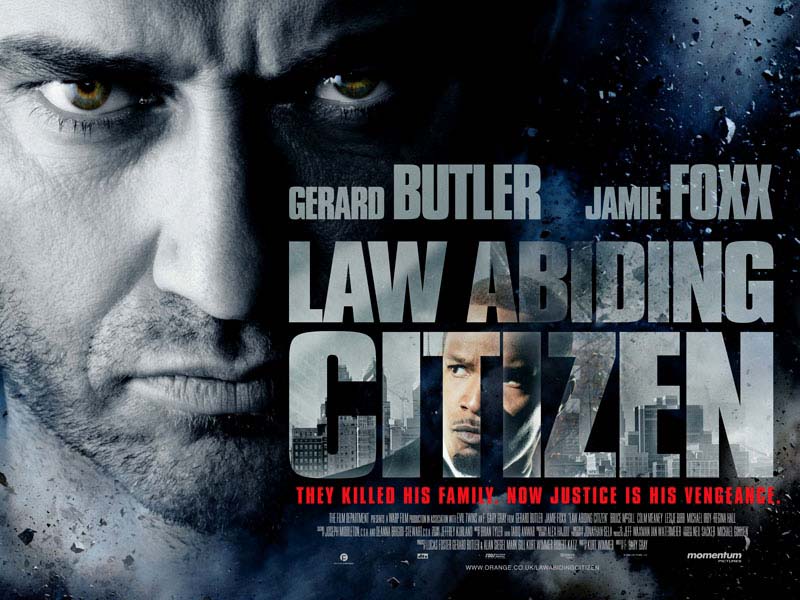
is this film the equilibrium is perfect both main characters family's are good as they should be, the disruption is when 2 thugs kill Gerard Butler family raping his wife and 10 year old daughter, people recognize this and take them to court but only one goes to death row, his attempt to make think right is taking vengeance on the people who didn't help to their fullest, after he kills his self and Jamie Foxx learns a lesson from him no hes a better person and family man.

relate this this theory to my own production i know it works, to support this
A state of equilibrium (all is as it should be) - babysitting as normal
A disruption of that order by an event - freaky clown object 
A recognition that the disorder has occurred - that its real
An attempt to repair the damage of the disruption - saving the baby
A return or restoration of a NEW equilibrium - the clown is killed/ caught 

i think this theory is better and work for nearly all the films.

Mise-en-Scene


Objective: To be able to show an understanding of how mise-en-scene is used to create meaning

Outcome:
All: will be able to explain one element of mise-en-scene
Most: will be able to identify the 5 elements of mise-en-scene with some examples
Some: Will be able to identify the 5 elements of mise-en-scene and will also be able to use media language effectively to explain examples

Mise-en-Scene (MeS) is a French term meaning ‘what is put into the scene or frame’. What is put into or left out of a frame can make a big difference to how we receive the film and how we are supposed to feel.


The elements of mise-en-scene are an indicator of the genre of the film and as an audience we have expectations of the mise-en-scene depending on the genre.
The elements within MES include;

  1. setting and props
  2. costume, hair and make-up
  3. facial expressions and body language
  4. lighting and colour
  5. positioning of characters & objects within a frame
·                     SETTINGS & PROPS

Settings used in a film are rarely just backgrounds to the characters and sometimes we see settings with no action taking place. Filmmakers can choose to build a set from scratch in a studio. Alternatively a lot of time and effort is put in by a location manager to find a setting that already exists.

Props is the term given to objects in a scene and are usually used to help the narrative or to follow the generic conventions of a film.

·                     COSTUME, HAIR & MAKE-UP

Costume plays a large part because it can indicate a character’s personality, social status and job. It tells us when the film is set and in what culture.

MAKE-UP
Make-up in the early days of cinema was used to highlight facial features, as black and white film stock could not register detail very well.


·                     Facial Expressions & Body Language

Facial expressions are a clear indicator of how a person feels. The filmmaker may use a character’s eyes to draw our attention to something or a slight change in a character’s face can tell us something has happened.

Body Language also indicates how we are thinking and feeling. Everyone is different but we recognise common features such as shaking a fist means anger, or curling into a ball to protect ourselves.

·                     Lighting

Lighting can help to give a scene a realistic look (high key) or a dramatic look (low key). It can also be used to highlight particular objects, characters or to change a character’s appearance.

·                     COLOUR

Colour has connotations associated with it and can be used to create a mood and atmosphere.
Connotation= the secondary meaning of a word
-Yellow=
-Blue=
-White=
-Green=
-Black=
-Red=

Denotation= the first meaning of a word


·                     POSITIONING OF CHARACTERS & OBJECTS WITHIN A   
           FRAME

Positioning can indicate the importance of a person or object. If a character is positioned in the foreground we know to assume they have some importance in the scene. Also the positioning of objects can direct our attention to a particular area.

Lighting

Learning objective:
To learn the film language used to describe lighting techniques and effects
Analyse lighting techniques and their effects, using the correct terminology

Outcome:
All: will be able to describe one style of lighting techniques. (E)
Most: will be able to identify 2-3 lighting styles and explain the purpose it has. (C)
Some: will be able to identify the lighting style and will also be able to use media language effectively to describe the purpose it has. (A)

The purpose of Lighting in Flims 

To begin to acknowledge the ways in which lighting can shape the ways we respond to a film, think over the scene in Alfred Hitchcock's Suspicion (1941) as shown below


In this scene a man walks in with a small tray with a glass of milk that glows on it with all the shadows of the man walking the both of these together create a unease feeling toward what will happen making you think if the milk is posioned and so on.

Film lighting has three main purposes.
The frist is the clearness of the image.
It is important for the audience to be able to see all the important element in the frame, these might range frome facial expressions and gestures to the importantsee of a significant prop.
The second purpose is realism.
This is the visual scheme that suggest that the lighting come from a logical source within the film world. For example the lamp in this image below 
And finally the third is the creation of atmosphere or emotional effect.
This lighting effect was mainly for dramatic situations as the one in the video but then came to be used to sort its type of genre, for example one way to use lighting to create a emotional effect in a horror or a thriller is to focus the light on one object like a knife or as the video a glass to show that this object is important another way is to use shadow to create a mood that someone is following the character.

3 point lighting is a standard method used in film. By using three separate positions the camera can illuminate the shot's subject however desired, while also controlling the shading and shadows produced by direct lighting.

The three lights are:
Key Light: Is usually the brightest light and the most influential and serves as the principal illuminator. Here is an example of key lighting:

Back Light: Helps to counteract the effect of the key light, making the character/ object look more rounded it also separates the character/ object from the bakground and highlighting contours . Here is an example of back lighting:

Fill Light: Helps to soften the harsh shadows that the other lights create. Here is an example of filler light:


All together one by one this image show what they create

Angles of Lighting
Under Lighting is when the main source of light comes from below the subject. This tends to have a distorting effect on the character of object that is being lit and id often in Horror Films. Here is an example of under lighting:

Top Lighting is when the main source of lighting comes from above; highlighting the features of a character- it can be used to create a glamorous look in a star.

Back Lighting is when the light source is behind the subject. If little or no light is used, silhouettes are created.

High-key lighting means that more filler lights are used. This makes the  lighting appears more natural and realistic to our eyes. It can be used to describe lighting on brightly lit sets such as a recreated sunny day in the park, or to describe a more subtly-lit night time scene. Although shadows will be produced the contrast is a lot softer. 

Low-key lighting is when a scence has a high lighting ratio, especially if there is a predominance of shadowy areas. It tends to heighten the sense of alienation felt by the viewer, hence is commonly used in film noir and horror genres.


Watch matrix-1.avi in Entertainment  |  View More Free Videos Online at Veoh.com

I decied to look at another scence to talk about lighting my teacher said this secne from matrix is good and to talk about the way lighting relates to the characters. The whole scene is set in a run-down house and the only light is coming from three light two parallel to each other and the third out of shot above the fire place. The scene starts with a man in a black leather jacket (Morfeus) shutting the window, he then sit down with another man (Neo). Both now sitting in front of each other, Morfeus sits back in his chair making a lot of shadow on his face making us feel how relaxed and calm he is adding to the mysterious character he is. On the other hand Neo is sitting on the edge of his chair with the lighting hitting him at all angles making his face more readable with less shadows this also shows that he want the truth that Morfeus speaks and is not scared of him or opening up to him. after a while of talking he then offers him a blue pill and a red pill, there is a close of Morfeus face half of his faces is lit up by the lighting and the other is all dark shadows, in his glasses you can see his hands holding the pills and Neo face deciding which to pick. This show that the lighting makes Morfeus feel like he hold his fate, good and bad and that both sides are clearly shown which is which. Neo face in his lenses it is again all revealed to show his facial expression about the decision he has to make and again showing that he is pure and trusts Morfeus.

With out Lighting is this scene you as the audience would not feel how important Morfeus is and how mysterious he is and also that he holds Neo fate good and bad. You would also not Know how pure and ready to learn Neo is.  

Editing

EDITING

Lesson objective
To be able to show an understanding of how editing is used to create meaning.


Straight Cut
When from one is moved straight to the next shot. This is the simplest and most common form of editing.
Fade Out 
The screen fades out usually at the end of an episode to symbolise finish
Wipe Cut 
One side of the screen moves to wipe out the other.
Dissolve 
When one shot disintegrates into another smoothly.
Reaction Shot 
Any shot (often used as a cutaway) in which a subject reacts to a previous shot
Invisible Editing 
Most films are now edited in this way. The audience will rarely notice the editing as it supports rather than dominates the narrative the plots characters. The techniques give the impression that the edits are motivated by the events in the reality on screen.
Montage
Is the speed of editing where shots are quickly juxtaposed together to create excitement.
Slow Editing
Is when clips are put together at a slower pase and this is to create suspense.
180 Rule
imagine a hypothetical line drawn between two or more actors, the camera must shoot on the side of the line and this is because it can confuse audience and also the shooting will not be consistent.
Shot Reverse Shot
This is mostly used in films where a conversation is taking place and it is when one quickly follows another shot.
Jump Cut
A drastic camera movement that is noticeable to the eye, in which the film suddenly focus's on something.
Linking of section
Is where one section of a film is linked to another scene which has significance.
Linking Shots
Is where a number of shots are linked together to add emotional impact.
Timing of Shots
In editing stage some shots are either slower or quicker to add emotional impact or to create suspense.
Kuleshov Effect 
Is where two shots together create a meaning.
Graphic Match
The stape from one shop matches the shape of the next. An example of this would be, a woman screaming with her mouth wide open in a circular shape followed by the next shot could be of a circular tunnel. 

Sound

Lesson Objective: To be able to show an understanding of how sound is used to create meaning.

Lesson Outcomes:
All will be able to explain the purpose of one sound technique (E)
Most will be able to identify and explain the purpose of 2-4 sound techniques (C)
Some will be able to use media language effectively to explain the purpose of 5 or more different sound techniques (A)


sound code:
The type of music in a text can convey a great deal of information about the mood and of the text. Tension and emotions can be helped by the music.


Diegetic: 
Sound you would expect to hear in the film world. It belongs with the frame. It will be the natural part of the narrative. Not always visible.


dietetic sound in thriller make the audience relate and feel a connection to what they are watching. the way i can use this in my own production is using the sound from running up the stairs and the crying baby also the alarm from the baby alarm to make it more clear.

Non-diegetic: 
This is sound or music that is added, such as in the editing scene.


adding sound like punches and click their knuckles is good because these are sounds that are normally quiet and sometimes not heard, in thriller you can use this to emphasis the sound of bones breaking or being stabbed also with of set screams. I could use this in my own thriller to emphasis the movement upstairs from the clown as it would be quite hard to hear. 

Rhythm of the music: 
This can dictate the rhythm of cuts, such as in fight scenes to create tension.


rhythm of music in thrillers are to create a atmosphere and also create suspense as your waiting for some thing bad to happen. i will use this in my own thriller to do the exact thing and then end it with something that wasnt expected.
Silence: 
creates tension.


the silence of this scene is very little but still create a effect of we are just sitting on the edge of the chair waiting for the action. i could use this in my thriller to emphasis the babysitting listening to sound but there are now this also create suspense

Voice over narration: 
This is when dialogue is added on in the editing stage and it is usually used to explain things that have already happened.


voice overs in thrillers are mostly to catch you up with the story or to used as the story teller. I could use this in my thriller by explaining what happens after the babysitter scene.

Sound bridge: 
this is when sound can be used as a bridge to maintain continuity in a sequence by running a soundtrack under a series of images to link them together, or to create a transition from one scene to another.


this is a good way to also explain the story or show a number of different views at once. i could use this in my thriller to show that a death has happened by playing a sad song and showing the babysitter on the floor then people crying so on ...

Parallel sound:  
This is when the sound and the image complement each other.


thrillers always use this to create suspense ,shock and surprise. i will use this in my thriller because it is a very good way to show the three S's and a lot of successful thriller use this.

Contrapuntal Sound: 
This is when the sound and image don’t complement each other. Happy music played over something sad happening on the screen.)


Wednesday, 27 October 2010

Cinematography

Learning objective
To be able to showing understanding to cinematography and how it is used within thriller films.

Lesson outcomes
All: describe at least one camera element. E
Most: describe at least 3 or more camera elements .C
Some: uses media language correctly to analyze the camera shots with example. A

The three elements that make up cinematography are:
Camera movement
Camera angles
Camera shots
 
Camera shots

A camera shot is the amount of space that is seen in one shot or frame. Camera shots are used to demonstrate different aspects of a film's setting, characters and themes. As a result, camera shots are very important in shaping meaning in a film.

Extreme long shot (ELS)

Contains a large amount of landscape. It is often used at the beginning of a scene or a film to establish general location. The way I would use this in my own production is to show my setting and everything around it so the audience can be used to the location and relate to the characters more. For example if the house is by its self in the middle of nowhere and I don’t show this we as the audience would think we don’t they just go next door for help or call someone to help, but by showing the house is in the middle of nowhere we know that the chanters are going to have a hard time to find help.


Establishing shot (ES)

Defines the location and gives the audience a perspective on the action that is to follow. Also they are often essential to defining a genre. The way I would use this shot in my own production is to make the shot look spooky so I could tell the audience with the first shot that this is a thriller movie and to prepare them for the film. For example a  lone house on a mountain with thunder and lightning this is a common scary house and once you see this you know that the film will be scary to fit it.


Master shot (MS)

Are similar to establishing shots and are used at the beginning of sequences, as a reference point for the rest of the sequence to follow. i would use this for my own production to show the audience many locations. For example if i was using two location and was jumping between them I would show both one after the other with a master shot so the audience know both location and don’t get lost.


Long shot (LS)

Contains a complete view of the characters. From this shot, viewers can take in the costumes of characters and may also help to demonstrate the relationships between characters. You would mainly see this shot when a new character is introduced or a new relationship. I would use this in my production because i will need to show my characters relationships and costumes so the audience can relate with them more and know how they will act.  For example a long shot of a teenager with ripped clothes show that he’s dirty and don’t really care what he looks like he also can be poor which we all got from just seeing his costume.


Medium long shot (MLS)

When the shot focus on the subject from the knees upwards. It also permits a balance between the subject and surrounding. You will mostly see this shot when the director wants you to focus on the character and the background at the same time. I would use this for my own production to show scary scene when someone is following the character as the example below shows.


Medium shot (MIDS)

Contains the characters or a character from the waist up. From this shot, viewers can see the characters' faces more clearly as well as their interaction with other characters. This is also known as a social shot. you would mostly see this shot to get a good look of the character and they face expressions. I would use this in my own production to show the character clearly without being to close as seen in the examples below.

Close up (CU)

Contains just one character's face. This enables viewers to understand the actor's emotions and also allows them to feel empathy for the character. This is also known as a personal shot. You would mostly see this when the character is showing a lot of facial expression so the audience can clearly see and focus on this one character. I would use this for my own production to show my character reaction to something that is scary or upsetting them. The image below is a good example to show fear and the other image below that to show happiness.


Point of view (POV)

A shot used, to imply that the camera is looking from the eyes of the subject. You would most see this when the director want you as the audience to relate and fell like you’re the character. I would use this in my own production to show life though the eyes of the killer to look at the Victim as this make you feel for the more for the Victim. for example the image below when the killer is killing the victim this make us feel like we are killing her which make us feel sorry for the Victim.


Extreme close up (ECU)

Contains one part of a character's face or other object. This technique is quite common in horror films. This type of shot creates an intense mood and provides interaction between the audience and the viewer. I would use this in my own production to show key objects or to use along the kulcov effect to show someone is dead. For example the if I showed a man with a knife going to stab someone then went to the image below you as the audience would think that he has killed her.


Two shot (TS)

Is where two people are featured in the frame. This is mostly used to show conversation between two people. I would use this is my own production because its very easy to do and takes less effort than keep changing to person to person when talking. For example the images below show two people having a conversation in a mid shot view.


Over the shoulder shot

Is where the camera is placed at the shoulder level and is shot this way. Mostly used to show a person POV but with use also seeing the person. I would use this is my own production to show that the killer is watching the victim. For example the image below shows the victim from the killers POV but also show the killer.


Over head shots

Show the subject and surrounding to get more of an impact on what is happening. This is mostly used when we walk to see the character facial expression and the backgrounds alone side it. I would use this is my own production to show a climax to a scene. For example staring from a mid shot then to an over head shot to show the background then to fade out to black to end.


Camera angles

Camera angles are used to position the viewer so that they can understand the relationships between the characters. These are very important for shaping meaning in film as well as in other visual texts.

Straight on angle

Puts the audience on an equal footing with the character/s. This is the most commonly used angle in most films as it allows the viewers to feel comfortable with the characters. i would use this in my own production to make the audience relate a feel closer to my character. for example if my character was looking at you at eye level you will feel that the character is looking straight at you.


High angle shot

Is a camera angle that looks down upon a subject. A character shot with a high angle will look vulnerable or small. These angles are often used to demonstrate to the audience a perspective of a particular character. i would use this in my own production to show how powerful some one feels looking down on another character. For example a vampire looking down on it prey.

Low angle shot

Is a camera angle that looks up at a character. This is the opposite of a high angle and makes a character look more powerful. This can make the audience feel vulnerable and small by looking up at the character. This can help the responder feel empathy if they are viewing the frame from another character's point of view. i would use this in my own production to show that the character/killer has more power over us and the victim . For example a man with a knife standing with a low angle looking up to him.


Camera movement

Zoom

When zooming the camera does not move and the lens is focused down from a long shot to a close up, whilst recording. This is mostly used to emphasis key images that are too far. I would use this in my own production to zoom in from a long shot to a close up of the killers face to make it more intense.

Tracking( Dolling)

When tracking, the camera itself is moved smoothly towards or away from the subject while the focus remains constant. Tracking in (like zooming ) draws the audience into a closer relationship with the subject , moving away tends to create emotional distance. This is mostly used to follow the action in the film. I would use this in my own production to follow my victim running away from something or to something.

Tracking back
Tends to divert attention to the edges of the screen and the speed of tracking may affect the viewer’s mood.

Pan

The camera moves from left to right or right to left to follow a moving subject. This is mostly used to show the surrounding of the character to get a good sense of what’s going to happen. i would use this in my own production to emphasise how spooky my location is. For example a pan for a house on the mountain to show the house, mountain, the fog and that nothing is around it.

Whip pan

Is when a very fast pan causes the subject to blur. This is mostly use to quickly spin around to focus on something else. I would use this is my production to show the victim then to whip pan around to show the killer attacking.

Hand-held

Is used to produce a jerky, bouncy, unsteady image , which can create a sense of immediacy or chaos. This is mostly used to make used feel like we are watching armature footage. I would use this is my own production by used it like some it film the last day of their life with a mobile phone camera. For example the video footage will be jerky and have bad quality.   


Tilt shot

Is where the camera moves up and down or down and up from a fixed axis. This is mostly use to create a atmosphere of the person it is used on from going just from feet to the head like the example below. i would use this for my own production to create a scary mood towards my killer from use the same type of tilt from the example below.
Rolling shot

A camera moves diagonally, which makes the image askew (often used to show that a character is drugged/drunk). I would use this in my own production to emphasis the victim pain of being stabbed and to have the rolling shot to do that.


Network