Lesson objective: To be able to show an understanding of what Narrative theory is.
Lesson outcomes
All: will be able to describe the different points of the theory (E)
Most: will be able to explain the different theories with appropriate examples (C)
Some: will be able to use media language effectively to discuss the purpose of narrative theory with a variety of examples (A)
Narrative convection's
Lesson outcomes
All: will be able to describe the different points of the theory (E)
Most: will be able to explain the different theories with appropriate examples (C)
Some: will be able to use media language effectively to discuss the purpose of narrative theory with a variety of examples (A)
Narrative convection's
· Genre
· Character
· Form
· Time
We use the knowledge of these conventions to help us interpret the text. In particular, Time is something that we understand as a convention - narratives do not take place in real time but may telescope out (the slow motion shot which replays a winning goal) or in (an 80 year life can be condensed into a two hour biopic). Therefore we consider "the time of the thing told and the time of the telling." (Christian Metz Notes Towards A Phenomenology of Narrative).
It is only because we are used to reading narratives from a very early age, and are able to compare texts with others that we understand these conventions. A narrative in its most basic sense is a series of events, but in order to construct meaning from the narrative those events must be linked somehow.
Vladmir Propp- Russian critic published his Morphology of the folk tale in 1928.
Characters according to Propp, have a narrative functions; they provide a structure for the text. Soviet cinema produced excellent films.
Characters that perform a function
The Hero- a character that seeks something
The villain- who opposes or actively blocks the hero's quest
The donor- who provides an object with magical properties
The dispatcher- who send the hero on his/ her quest via a message
The false hero- who disrupts the hero's success by making false claims
The helper- who aids the hero
The princess- acts as the reward for the hero and the object of the villains plot
Her father- who acts to reward the her for his effort
Actions as functions of narrative
Preparation
- A community/ kingdom/ family is in an ordered state of being
- A member of the community/ kingdom/ family leaves home
- A warning is given to the leaders of the community or a rule is imposed on the hero
- The warning is discounted/ the rule is broken
- The villain attempts to discover something about the victim of the broken rule
- The villain tries to deceive the victim to gain advantage
- The villain unwittingly helps the villain
During this preparation there is a complication, transerfance, stuggle and return. The complcation could be the villain harming a member of the community/ kingdom/ family. The transferance could be when the hero leaves home. The stuggle could be between the hero and the villain. The return is when the hero returns. recognition is when the hero is recognised or the false hero is punished.
a example of this theory is sherk

this is because they all fill the character slot what propp think a narrative has to have. to support my example i used propps character list to work for this film.
The Hero- Shrek
The villain- normal People and Lord Farrqued
The donor- Donkey
The dispatcher- Lord farqued
The false hero- Lord Farqued
The helper- Donkey
The princess- princess
Her father- true love
i tried to use this for my own production
The Hero- Baby sitter
The villain- clown
The donor- herself
The dispatcher- herself
The false hero- ________
The helper- __________
The princess- the baby
Her father- the baby mum and dad
as you can see the propp theory don't really work for my own production and in my research I have found it don't work for any horrors or thrillers because the "hero" sometimes dies or Fails.
Todorov Theory
Tzvetan Todorov simplified the idea of narrative theory whilst also allowing a more complex interpretation of film texts with his theory of Equilibrium and Disequilibrium.
The theory is simple;
The fictional environment begins with a state of equilibrium (everything is as it should be)
It then suffers some disruption (disequilibrium)
New equilibrium is produced at the end of the narrative
There are five stages the narrative can progress through:
A state of equilibrium (all is as it should be)
A disruption of that order by an event
A recognition that the disorder has occurred
An attempt to repair the damage of the disruption
A return or restoration of a NEW equilibrium
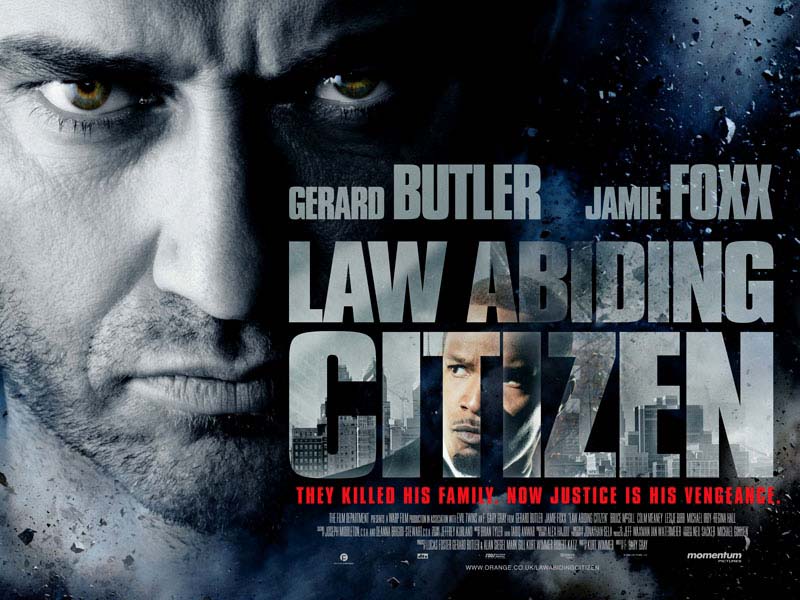
a example of this is
 is this film the equilibrium is perfect both main characters family's are good as they should be, the disruption is when 2 thugs kill Gerard Butler family raping his wife and 10 year old daughter, people recognize this and take them to court but only one goes to death row, his attempt to make think right is taking vengeance on the people who didn't help to their fullest, after he kills his self and Jamie Foxx learns a lesson from him no hes a better person and family man.
relate this this theory to my own production i know it works, to support this
relate this this theory to my own production i know it works, to support this
A state of equilibrium (all is as it should be) - babysitting as normal
A disruption of that order by an event - freaky clown object
A recognition that the disorder has occurred - that its real
An attempt to repair the damage of the disruption - saving the baby
A return or restoration of a NEW equilibrium - the clown is killed/ caught
i think this theory is better and work for nearly all the films.


Jordan you show a basic understanding of both film theories. In order to deepen your knowledge you must relate each theory to exsisting films and suggest how each theory relates to the production.
ReplyDeleteIs there any way you can link these film theories to your own production? what elements can you use?
Jordan you have added to this post however ever so slightly, you manage to link your own theory to Todorov 's theory however you have not demonstrated how your narrative supports Todorov's theory.
ReplyDelete